A Levittown Winter Garage Door Guide: Cold, Salt, and Springs
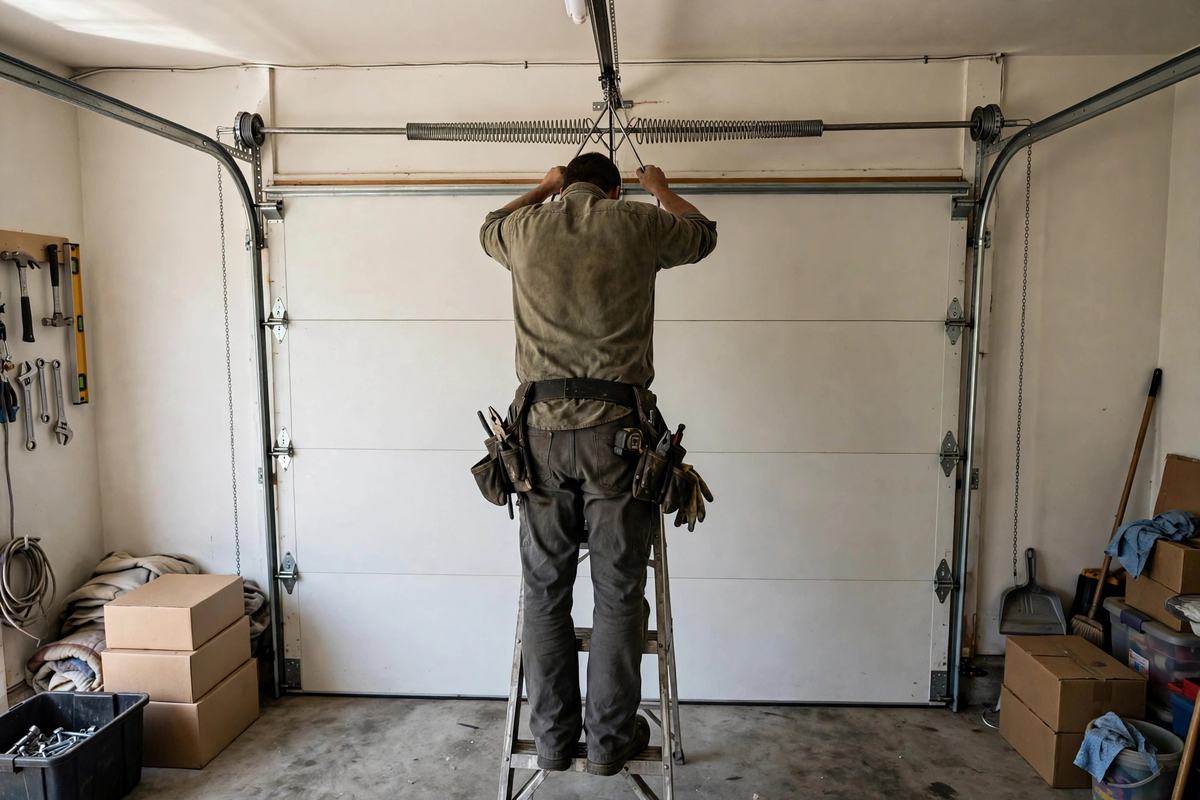
Garage doors fail in winter for physical reasons. Spring steel grows more brittle as temperatures drop, so springs that were near their cycle limit let go in cold snaps. Metal contracts, lubricant thickens, rollers and hinges resist, and the opener reads the extra resistance as an obstruction and reverses. Add road salt and meltwater corroding the bottom panel, the bottom seal, and the lift cables, and winter is when every marginal part on the door files its resignation at once.
A Levittown winter tests the door as a wall: twin-home garages under living space lose heat through a tired door, springs stiffen and snap in cold snaps, and weather seals give up on the season's schedule. The guide's winter order is balance, seal, then insulation class, because in this community the garage door is a meaningful share of the home's heated envelope.
The fall checklist that prevents most of it takes twenty minutes: run the door and listen for new noises; check the cables where they meet the bottom brackets for rust and fraying (look, never touch a cable under tension); test the auto reverse and the sensors; clear the sensor lenses; and look at the bottom seal, which is what stands between meltwater and your garage floor.
One winter habit matters more than the rest: if the door freezes to the ground at the bottom seal, do not force it with the opener, which can tear the top section or strip the opener. Free the seal gently first. And when a spring does let go on the coldest morning of the year, know that every door company in town heard the same bang from a dozen garages; calling early in the day is the difference between today and Thursday.
Request a callback
Prefer to talk later? Leave your details and an independent local pro will call you back. No charge to you, no obligation.
Bristol Pike Garage Door Co is a free referral service. Submitting this form connects you with independent local contractors who provide the work.